
The Root of All Evil - Part I
Preface: This article is the first of a three part series. It establishes and defines the functional definitions that are used in the subsequent articles. Feel free to skip to Part II if you want to get right to the core of the message. —Any portions contained with hyphens like this are comments specifically aimed at participants in the ILR self-development program.— Feel free to skip past them if they distract from the message. Thank you for reading.
The root of all evil… It is a well-known, and heavily used phrase. It originated in one of the world’s most widely known books, the Bible.
—If anyone is bothered by the fact that I am quoting a phrase from the Bible, please understand my firm stance that human wisdom is by its very nature, agnostic. In my work, I use scripture from the Bible, the Quran, the Talmud, legends and folklore from indigenous peoples, the Tao Te Ching, and much more. Every culture has profound and distinct wisdom that we can all benefit from.—
In its original use in 1 Timothy 6:10, it was stated, “The love of money is the root of all kinds of evil.” Over time, it has changed form, as all philosophy does, into a more generalized form: The root of all evil is _____. Tolstoy even wrote a whole book about it, so to say I am late to the party would be an understatement (that party ended over a century ago… sadly blows party horn).
But, like any upstart writer in the 21st century, I will press on, because I have a different interpretation which I hope can prompt some thought in the reader. It expands on the intent behind its original usage.
The root of all evil… is insecurity.
To get there, . Language, like wisdom, is peculiar because two people can be speaking the exact same words, yet have vastly different interpretations.
—In our self-development work, this is an integral part of enhancing interpersonal relationships. When a specific word or phrase keeps coming up in a conflict, check in and make sure that you share an understanding of what it means to the other party. You will be surprised how often we speak the same words with vastly different interpretations.—
To most people, the word insecure evokes a specific derogatory connotation. It paints a picture of an individual who is weak-willed, unsure, or generally fearful of their position in a given scenario. It is one of many words in the standard lexicon that I will be highlighting as “pejoratives”, words that have been co-opted for social intentions and turned into subtle insults to belittle without overt, aggressive language. While this usage fits into the extremes of my interpretation, it is not the core meaning.
From here on, when you read the word “insecure”, try to forget the pejorative label and the feelings it evokes. This sort of “relearning” of assumed definitions is absolutely vital. Understanding the nature of insecurity is an incredibly powerful tool for understanding human motivation.
When we break it down, the word insecurity is the antonym, the diametric opposite, of security, which has two useful definitions for this case: 1) The state of being protected against or safe from danger or threat, and 2) The state of feeling safe, stable, and free from fear or anxiety.
So our expanded definition of insecurity is: The state of not being protected from danger or threat, or the state of feeling unsafe, unstable, and vulnerable to fear and anxiety.
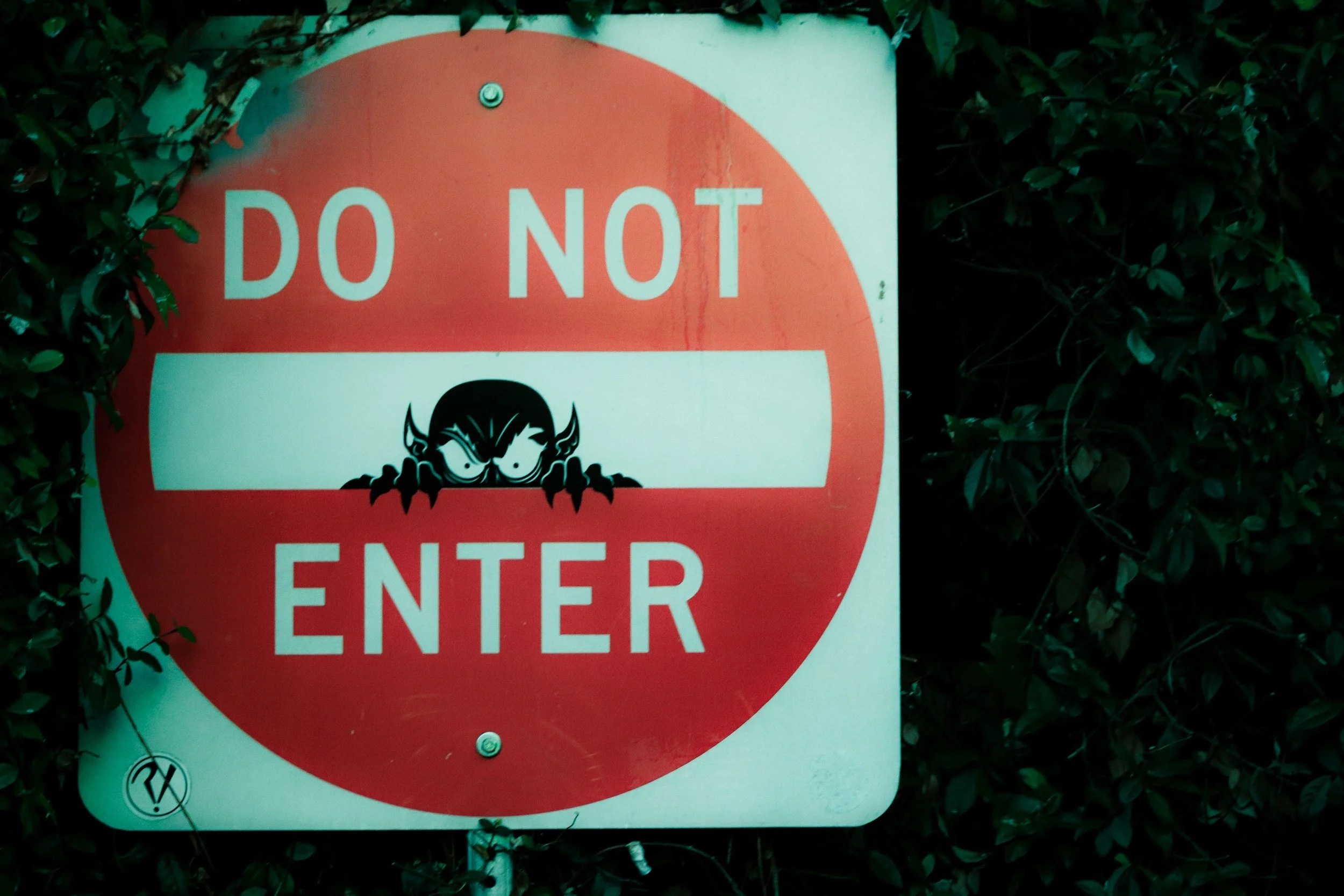
What an insecure little devil.
Starting to see where I’m headed? Now, to continue on this seemingly pedantic path (I swear it’s worth it), we need to address the other fundamental concept at play: Evil. This is where things get interesting. The basic definition of evil is an adjective meaning: ‘profoundly immoral and wicked’. Simple enough, right? Well, that all depends on your definition of morality. It becomes nearly impossible at this point to find common ground for all readers. Morality is a generally… flexible concept. It varies from individual to individual, from culture to culture, and from mankind to nature.
The question of what constitutes morality has been at the center of debate for millenia. Evil, in its most widely understood form, has strong religious connotations, denoting the demonic and the impure. The problem is, this kind of thinking often places evil in a less tangible domain, conflating it with the immense, esoteric concept of an immaterial deity driving the behavior of human beings. The sheer scale of that conceptualization compromises our ability to interpret the less severe, minor evils that we commonly encounter in the world. Let’s engage with a definition that applies to our lives in a more understandable way.
In my interpretation, evil is: any act that causes unnecessary harm or undue suffering. Simple, straightforward, and a lot more understandable than the cosmic puppetry of an immortal entity, yeah?
So, this definition categorizes a lot of things that we all engage in as evil, now, doesn’t it? I never said this would be a comfortable read, but this type of reflection is important for us to understand our impact on our environment and those around us. A particularly irksome detail for many people is that this definition does categorize factory farming as unnecessary (sorry to all of us non-vegans), but more on that dynamic later (As an aside, I consume meat in moderation, but I also do not claim that any of us are free from evil, so I do not find my stance hypocritical).
The specific instance of food is where the distinction becomes even more interesting, because human beings have a unique aspect to our consciousness that allows us to categorize harmful actions as such: the ability to recognize pain in other beings.
The act of killing for food in nature, for example, is not inherently evil by itself. Violent? Certainly. Destructive? Undoubtedly, but not evil. A lion crushes the neck of a gazelle, tears sinew from muscle, and consumes organs from its still warm body. Still, in most moral interpretations, the lion’s act is not specifically categorized as evil. Harm is present, suffering is present, and yet we define the act as necessary for the lion’s survival. Also, the lion does not possess the mental capacity to recognize suffering in its prey, and as such, it is absolved of the designation. This is one of the areas where the definitions get muddy, because predators in the wild share a habit that many human cultures have transcended beyond: consuming prey while it is still alive.
Yes, you read that correctly. Save for specific instances of animal cruelty, humans are the only known species that almost ritualistically performs a “mercy kill” (a practice shared across countless cultures). Even if we must consume something for food, we tend to make sure it is fully dead, absent of any ability to feel pain before we begin the process of preparing it as food. Again, this is in the general sense. There are specific instances where we boil things while alive, and specific cultural instances of eating live animals, but generally, most are not all that keen on the practice.
Human beings have a low threshold for observing suffering, no matter the species. Lions, on the other hand, do not share our more fragile moral sentiments about food consumption, and will consume their prey while it is still alive, actually going for the softest parts first, which extends the suffering of the prey. Still, we don’t call it evil due to the lion’s lack of awareness. Instead we call it instinct. In this regard, humanity has a big leg up on the animal kingdom, insofar that the average human instinctively seeks to end the suffering of other living beings. Mercy killing is even performed on non-food animals for whom a more painful death is imminent.
So, if most humans have this built-in instinct to reduce suffering, why then do we engage in behaviors and activities that not only bring suffering onto other beings, but also upon ourselves? Why do we constantly fight, wage wars, create systems that inflict crippling debt, cause environmental destruction, and heap emotional harm upon those around us? Why does mankind continue to engage in major and minor evils alike?
At its core, the answer is insecurity.
-Read on in The Root of All Evil - Part II.