
What’s in a reaction?
The majority of those in pursuit of self-development tend to enter the space due to a conflict. This conflict might be with another person, with the world at large, or simply within themselves. When unpacking these dilemmas, the most common theme that emerges is often an undesired reaction. Sometimes, another person has been reacting to the individual in a way that hurts them, or that they resent. Other times, their own reactions have become so conflicted that they feel the need to seek understanding.
Reactions are the key to many aspects of self-development. They affect our relationships, our worldviews, and deeply determine our internal sense of balance.
The Concept
Reactions are not only present in human dynamics. They occur throughout existence, within every field of science. On the largest scales, celestial objects crash into each other in reactions of cataclysmic beauty, their byproducts forming into new planets, moons, or even new stars. At the smallest scales, microorganisms have automatic reactions in response to changes in light, the presence of predatory organisms, or changes in the acidity of their environments.
To understand the nature of reactions is to understand a fundamental truth about our existence.
A good place to start is the realm of chemistry. Based on this framework: A reaction is the result of one or more substances undergoing changes into new forms or states.
Reactions most often occur when two substances meet. The substances that cause, or undergo a reaction are called reactants. Each reactant possesses a quality that elicits a reaction from the other. Chemical reactions are often obvious, accompanied by a puff of smoke, a flash of sparks, or an audible sizzle. Some chemical reactions… lead to explosions.
Human reactions share many qualities with those of the chemical kind (minus the smoke, though I’m sure we’ve all heard a… sizzle, of sorts before). They are the result of one or more reactants colliding, producing an effect, and subsequently, changing states.
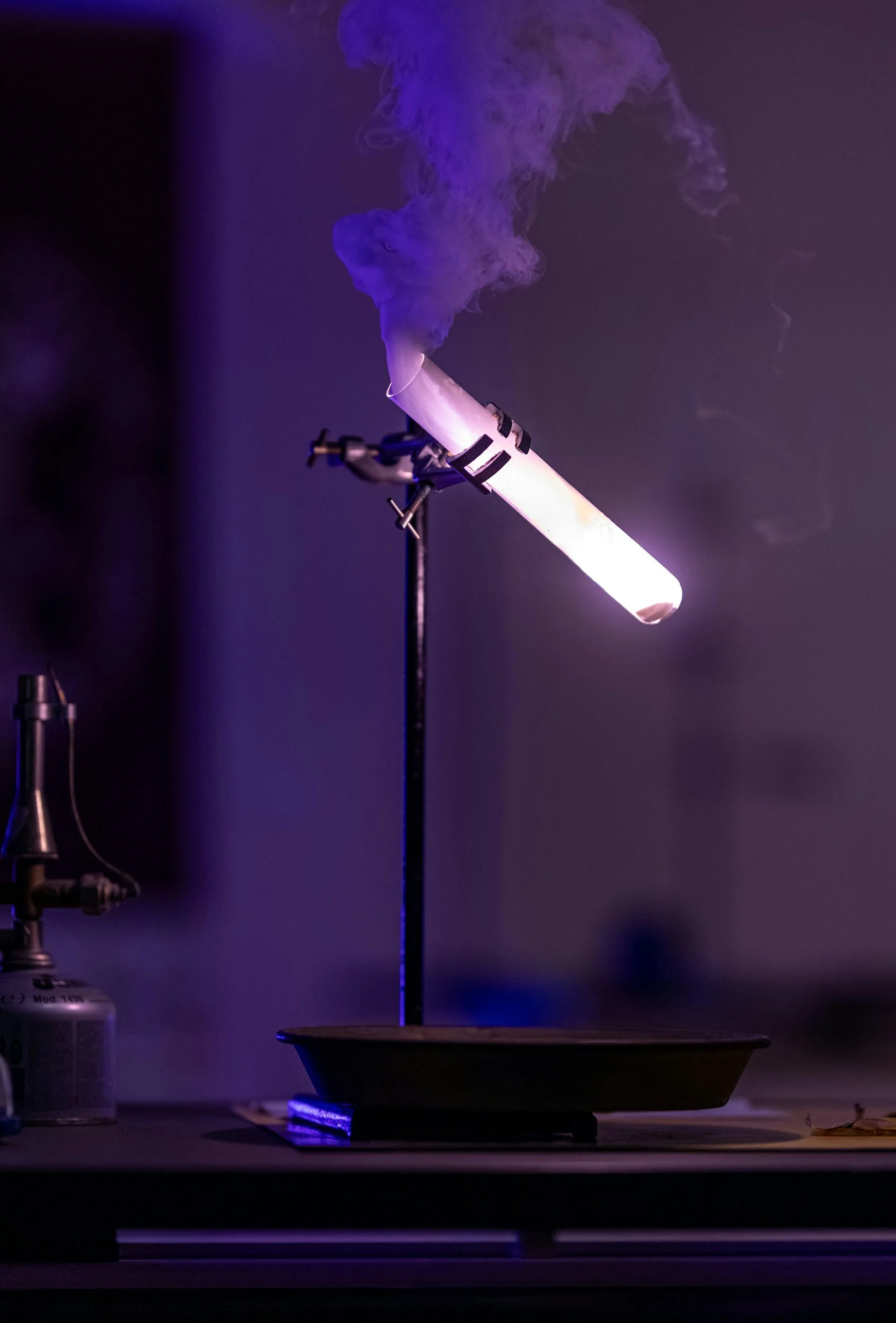
Ah, yes… Thanksgiving dinner, 2020.
The Physical Source
Within human reactions, there are a few important factors to address. While chemistry has the ability to strictly observe subtle molecular changes between reactants, human reactions are obviously much more complex. Chemical reactions can be performed in sterile environments, with outside influences diligently controlled, while human reactions occur almost exclusively in uncontrolled environments. Finally, the human mind is the product of trillions of processes occurring simultaneously. Neurochemical processes, mental processes, biological processes, and so on. It is much more difficult to pin down a straightforward explanation in this sense.
The “mind”, as we know it, is widely misunderstood. Though we treat physical health and mental health as if they are separate entities, they are completely, and unavoidably interconnected. The brain and the body are inseparable. They do not exist, nor operate independently of one another. The human nervous system, starting at the brain, reaches through the spinal cord to the farthest reaches of the body. Every limb, every organ, and every muscle is connected to it. It is all one.
To put it into a metaphor, our nervous systems are the control centers of our physical forms. If the spirit is the pilot, the nervous system comprises the controls, the dials, the wiring, the sensors, and the alarm systems (plus much, much more). Our nervous systems process all of the information that we receive, both internally and externally. Every glint of light, every raindrop, every spoken word, and every thought we have is funneled through and processed by the nervous system.
Going forward, any time I reference the nervous system, I am referencing the sympathetic nervous system. There is another side to the system, the parasympathetic nervous system, but it is not implicated in the acute reactions we are addressing. I will speak about it in a different article.
High Stakes, High Demand
Processing is far from the nervous system’s only task. Behind the scenes, it unconsciously conducts nearly every automatic process that keeps our bodies functioning. Heartbeat, breathing, digestion, waste removal, pain monitoring, the list goes on, and on. As a result, it should seem obvious that the nervous system processes at an immeasurably high demand.
At its core, the nervous system has one primary directive above all others:
Keep. This. Human. Alive.
It is no secret that the world that we live in presents innumerable dangers, any of which could compromise the nervous system’s ability to maintain its directive. Predators, environmental hazards… even other human beings could pose a threat to the well-being of an individual. The nervous system is the guardian of our well-being, and, as a result, it can, at times, be quite… overzealous in its role. “Better safe than sorry”, it turns out, really does keep one alive much more easily than “guess it was nothing.”
Here, the equation becomes even more intriguing, because every individual’s nervous system is different. They adapt over the course of one’s life. While a great deal of their wiring is written through genetics, they also learn from lived experiences (physical, mental, and spiritual). They must correctly identify, categorize, and react to threats, both implicitly known (the sound of screaming, the darkness, swiftly moving objects), as well as those that are at first unfamiliar (invisible toxins, subtle verbal threats, abnormal behaviors).
Back to our chemistry metaphor. When a reactant (in the form of “stimuli”, the scientific term for sensory information) meets the nervous system, it is processed rapidly, categorized, and, if necessary, triggers a reaction, a change in state. If the reactant is determined to be a threat, the nervous system kicks the body into high gear in order to uphold its directive (keep the human alive). You might have heard this referred to as “survival mode” or fight-or-flight. It floods the body with stress hormones, increasing the heart rate, intensity of breathing, and tension in the muscles in preparation for rapid movement. It diverts brain power to the sensory organs, allowing us to receive more information. If the threat is real, it might only have milliseconds to react. If it does not, it fails its directive.
And from its hardwired standpoint, if the nervous system fails its directive… the human could die.
Defenses Engaged
The range of human reactions are best understood through this framework. Our nervous systems don’t have the privilege of treating perceived threats as anything but potentially dangerous. A reaction often does not reflect the true intensity of the threat, and can easily exceed it. Remember, better safe than sorry. These defensive states make sense in the presence of a tangible, physical threats, such as a predatory animal charging towards us. They become less logical when applied to the more civilized nature of the lives we now lead. Regrettably, our nervous systems do not process social information separately. The same sensory inputs, threat detection processes, and brain regions process social threats as those of a physical nature.
This is the reason a perceived slight in a conversation can elicit an outburst. The nervous system flags it as a threat, processes it rapidly, and responds with an intensity that may not be appropriate. As much as we ‘know’ that outbursts are not ideal, sometimes the system simply acts with intensity, just in case. It is a defensive posturing, a panicked lashing out at a threatening cue. These are hardwired instincts. To underreact might lead to disaster. In the context of a predator, a lack of response could mean physical death. In a social context, not striking back could equate to social death, through a loss of status.
The specific wiring of an individual’s nervous system plays into this as well. Individuals who have been recipients of bullying or verbal abuse often have pronounced reactions even to otherwise innocuous teasing. These byproducts of lived experience are invisible, internal, and hard to grasp without explicit information. As a result, the reaction itself becomes the focus. Intense reactions can be disturbing on the surface, especially if we are not aware of these facts. However, knowledge gives us the power to humanize these troubling moments. Reactions of heightened intensity are usually the byproduct of some type of hidden pain. Something unspoken, something suppressed, only rising to the surface when the pressure grows too great.
There is a reason that our nervous systems rewire to protect us. Our lived experiences do a number on our nervous systems. The most pronounced example of this rewiring of the threat response is in post-traumatic stress disorder, where a deeply disturbing event, or series of events, takes place. In such circumstances, the individual’s nervous system undergoes a series of drastic changes. Brain regions responsible for threat detection grow larger, the processing speeds of those neurons intensify, and defensive physiological processes become more automatic. An individual suffering from PTSD, both acute (from one significant event) or chronic (multiple smaller events), can become stuck in a form of passive survival mode. Their nervous system has learned that the world is unsafe, and as a result, it remains in a state of heightened activation, constantly seeking out potential threats, rather than reacting when they arise naturally. Emotional outbursts, apparent rage, panic disorders and the like become commonplace. It can be highly disturbing, even to those who do possess a proper understanding, but at its core, it is the person’s nervous system trying to keep them alive, unconscious to any damage it leaves in its wake.
Though the average person may not experience this condition in its full severity, it is a clear example of the adaptive capacity of our nervous systems. We don’t have to experience a massive trauma to form a threat response to a stimulus. It just has to hurt enough for our nervous system to remember enough to engage defenses.

“What do you mean? Of course I’m being vulnerable!”
Crossed Wires
Our nervous systems are still almost identical in function to those of our ancient ancestors. Evolutionary changes to such robust systems gradually occur over the course of thousands upon thousands of years. Despite living in this modern world of flashing lights, glowing screens, and bustling cities, our nervous systems are still wired for the environments that we used to inhabit, and the slower, more deliberate lives we used to lead. Life used to involve consistent movement by necessity, lots of walking outdoors, and physical, tangible work. Information traveled slowly, it was delivered from individual to individual, fostering social connection and reducing overwhelm. There were predictable periods of darkness. When night fell, there were fewer artificial lights to keep our brains awake into the late, late hours of the night. This was mankind’s reality for hundreds of thousands of years.
Though the changes from pre-industrial to the industrial age were drastic, they still had more in common with the older way of life than modern lives do to post-industrial era lives. The changes have grown more extreme in recent decades. The advent of social media, smartphones, and later, algorithmically fueled engagement farming has changed our relationship to the world even more heavily. There used to be a defined separation between stimulus and silence. There used to be natural moments where nothing was playing in the background, where no one was vying to capture our attention, or being paid to lure us back in to the whirlpool. The modern life has become one of near constant stimulus, and this uninterrupted processing has led to a steep taxation on already reactive neurobiological systems.
Our nervous systems are simply overloaded. They are not built to process the flood of information, demands, financial pressures, or passive stressors that we currently face. Many groups have discovered the financial, social and political benefits of manipulating these automatic human systems, and have manufactured entire ideologies to keep us operating through fear, scarcity, and in patterns of perceived self-protection. This has resulted in various forms of high-pressure functioning emerging within the populace. Individuals who have become wired to erupt outwardly through indignance, or anger. Others who sublimate, using the discomfort to fuel self-promotion, status-seeking, wealth accumulation, or other forms of security in the social hierarchy. The rest fall inward, shoving their reactions down deep, and pretending that they are unaffected. They become numb.
All of these reactions are functions of attempted control. Nervous systems in overdrive, stoked by imposed insecurities, seeking to eliminate the uncertainties of which life is implicitly composed.
The Takeaway
This framework of reactions as defenses is the key to some of the most important lessons in self-development. We are often inclined to view visible reactions of others as personal failings, however, this is an area where we fail each other quite often. By categorizing reactions as such, we create a social dynamic of castigation, judgment, and rejection, rather than enhanced understanding and nuance.
Reactions are invaluable sources of information, if viewed correctly. Their manifestation signifies that an individual has entered an automatic defensive state. Their nervous system flagged something about the stimulus as a threat, possibly even on an existential level. Remember the chemistry metaphor? The reason it is so important is because reactants only cause effects if they possess specific qualities in relation to the other, some combination of ingredients that either neutralize, catalyze, or cause an explosion.
In that human moment of a visible reaction, we need to understand that some quality of the stimulus or the nervous system it is interacting with (the reactants) has manifested in discomfort, or pain. Their reaction is an automatic response, a desperate flailing to cut out the source of the pain. This does mean that the reaction is excusable, it just means that we can use it to inform ourselves, rather than be disturbed by it. Anger, believe it or not, is so often fueled by pain. When we see things as they really are, we start to understand that some of the angriest, most uncomfortable people to be around… are actually hurting the most. By becoming more aware of these dynamics, in such moments, we can defuse tension, instead of reacting ourselves. Reactions quickly become reactants themselves if not handled properly, and chain reactions can be devastating.
In summation: When we experience a reaction, big or small, within ourselves, or others, the best thing we can do is to take a step back, rather than to engage directly with it. We need to give our nervous system a few moments to catch up, because if we don’t, it will very likely act automatically in a pattern of self-protection. When we have steadied, we can then ask questions to gain clarity. (What could be causing this intense feeling?) (What could I/they be trying to protect myself/themself from?)
Reactions, within limits of course, are not always accurate representations of character, or even intent. They are immensely complicated equations between reactants, the qualities therein, and baseline stress levels. The less we take anything personally, the closer we get to understanding their true source.
Give yourselves, and those around you, far more grace in this regard. You will be surprised how often a connection will be enhanced, rather than strained, by utilizing this framework.
Take care everyone.